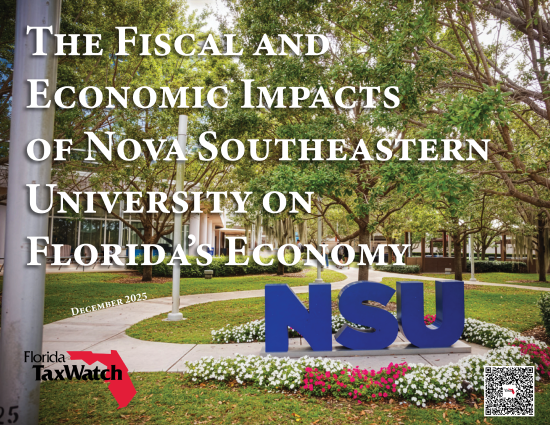
NSU is the state’s largest private research university. With its elite “R1” designation by the Carnegie Classification of Institutions of Higher Education, NSU is among universities reaching the highest levels of research activity, research funding, and doctoral degrees awarded.
As one of only three universities in the U.S. with both Doctor of Medicine (M.D.) and Doctor of Osteopathic Medicine (D.O.) colleges, NSU is the largest educator of physicians in Florida and the largest producer of health care providers (with terminal degrees) in the nation.
NSU’s flagship main campus is located on 314 acres in Ft. Lauderdale-Davie. The main campus is home to NSU’s academic and research hub which includes 13 colleges, centers, and schools, as well as one of the largest libraries in the state.
NSU offers 131 undergraduate, graduate, and professional degree programs through its 12 colleges. Almost one-third of NSU’s undergraduate, graduate, and professional degree programs are health-related. More than 6,400 degrees were awarded during the 2023-24 academic year.
NSU enrollment has remained largely consistent over the past five academic years, with fall enrollment increasing from 20,435 in 2020 to 20,910 in 2024. Although total enrollment has remained largely consistent, NSU has experienced increases in undergraduate and professional program enrollment coupled with decreases in graduate level enrollment.
A full-time beginning undergraduate student at NSU can expect to pay just under $40,000 annually for tuition, fees, books, and supplies. When food, housing, and other expenses are included, a full-time beginning undergraduate student at NSU can expect to pay from $47,119 to $65,137 annually, depending on whether they live on or off campus, or with family.
Ninety-four (94) percent of degree/certificate seeking undergraduate students during the 2022-23 academic year received a total of $140.7 million in grants and scholarships, an average of $21,709 per student. Forty-four percent of non-degree/certificate seeking undergraduate students during the 2022-23 academic year took out federal student loans.
The official three-year cohort default rates for NSU graduates who graduated in 2021 is zero percent, with only one out of 5,155 members of the cohort defaulting on their federal student loan.
For full-time undergraduate students who began their studies at NSU in the fall of 2022, 76 percent returned in the fall of 2023. For part-time undergraduate students who began their studies at NSU in the fall of 2022, only 22 percent returned in the fall of 2023.
Fiscal and Economic Impacts on Florida’s Economy
NSU generated an estimated $293.1 million in state and local taxes within the Tri-County region in FY 2024-25 and an estimated $305.1 million in state and local taxes in FY 2024-25.
All told, NSU operations and alumni spending generate 35,162 jobs and $6.55 billion in economic impacts within the Tri-County region in FY 2024-25 and 36,841 jobs and $6.79 billion in economic impacts statewide in FY 2024-25, respectively.
Every $1 invested by an NSU student generates a return (earnings gained) of more than $6.
Meet the Author: