Each year, more than one hundred million visitors come to Florida to enjoy its beaches, warm temperatures, and its numerous parks, thrills, and attractions. Latest FloridaCommerce data confirm that Florida set a new all-time annual record in calendar year 2024 with 143 million visitors an increase of 1.7 percent over the previous record set in 2023. Out-of-state visitors to Florida spent $134.9 billion in calendar year 2024. For every $1 spent by a visitor, 99 cents stayed in Florida’s economy, with 59 cents supporting worker salaries. Tourism supported 1.8 million jobs in 2024 and generated $79.9 billion in wages, including $44 billion in direct wages. Tourism-related activity produced $33.6 billion in federal, state, and local taxes. Tourism accounted for 7.8 percent of Florida’s Nominal Gross State Product (GSP), contributing $133.6 billion to the state’s economy in 2024. Without tourism, Florida households would pay $1,730 more annually in state and local taxes alone to sustain current levels of revenue.
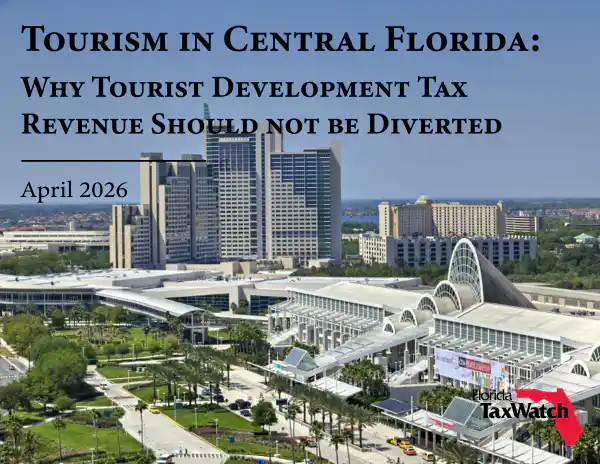
Central Florida attracts a majority of visitors due to its many attractions and proximity to Florida’s east and west coasts. Home to more than a dozen of the world’s top theme parks and water parks, Central Florida is the theme park capital of the world. Home to the Orange County Convention Center (OCCC) and dozens of world-class hotels, Central Florida is the number one meeting destination in the U.S. A 2024 economic impact study showed that Central Florida’s tourism industry generated an economic impact of $94.5 billion.
This impact supported more than 468,000 jobs and generated $28 billion in wages. State and local taxes collected from visitor activity reached $6.7 billion. The taxes paid by visitors and tourism entities saved Central Florida households an average of $7,474 in taxes. Of the total visitor spending, 85 percent originated in Orange County.
To capture the impacts of visitor spending in Orange County, Florida TaxWatch utilizes the IMPLAN economic model. Florida TaxWatch estimates the fiscal impacts (sales, TDT, and property tax revenues) of the I-Drive during FY 2024-25 to be approximately $1.8 billion. The fiscal impacts of tourism on Orange County are estimated at just under $2.7 billion. The economic impacts of tourism in Orange County result from the spending patterns of 75 million visitors, injecting funds and demand into the local economy. Visitor spending in Orange County supports more than 472,000 jobs and generates $75.9 billion in annual economic activity. Economic activity per TDT dollar spent ranges from a low $34 to a high of $103.
To remain competitive and sustain Florida’s share of the U.S. tourism market, Florida must continue to invest in tourism marketing and promotion to make sure that when tourists begin to plan their next vacation, they think first of Florida. Florida TaxWatch recommends the Legislature not approve any legislation that permits local governments divert the use of TDT-generated revenue from tourism marketing to support other activities.
Key Takeaways
- Tourism is a cornerstone of Florida’s economy: With 143 million visitors and $133.6 billion in economic contribution, tourism is not just a major industry — it is a primary driver of statewide growth, jobs, and wages
- Tourism significantly reduces the tax burden on residents: Visitor-generated tax revenue saves Florida households an estimated $1,730 annually, with even greater savings in high-tourism regions like Central Florida.
- Central Florida and I-Drive dominate economic impact: The region generates tens of billions in activity, supports hundreds of thousands of jobs, and continues to expand through major investments and development projects.
- Tourist Development Taxes are at the center of a policy debate: Lawmakers are weighing whether to expand TDT usage beyond tourism promotion, balancing community needs against the risk of reduced visitation.
- Tourism marketing delivers a strong return on investment: Each dollar spent on tourism promotion generates significant economic activity, reinforcing the importance of maintaining dedicated funding streams.
- Policy decisions will shape future competitiveness: Florida’s ability to attract visitors — and sustain the economic and fiscal benefits they bring — will depend on continued investment in tourism promotion and strategic infrastructure planning.
Meet the Authors: