Options to Eliminate or Reduce the Property Tax Burden on Florida Homeowners

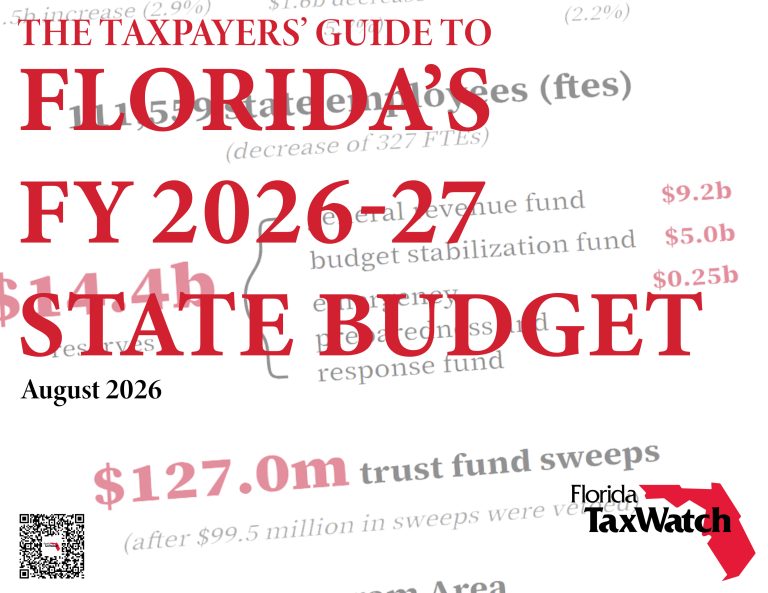
Property Tax Reform Options — Report Cover

Executive Summary

Florida's property tax system is at a critical juncture, with total levies surging by 108% over the last decade, far exceeding the combined rate of population growth and inflation. This rapid increase, generating $55 billion in 2024 for local governments, has intensified the financial strain on homeowners and raised fundamental questions about the nature of property ownership, which currently resembles a form of "perpetual rent" to the government. This report from Florida TaxWatch analyzes the current landscape and explores five distinct options for reform, ranging from the complete elimination of property taxes for homeowners to more immediate statutory changes aimed at increasing transparency and accountability.

The core issue addressed is the mounting property tax burden, which increasingly makes homeownership—the "American Dream"—less attainable for many Floridians. In response, this report details several potential reforms:

Reform Options

  • Phased elimination for homeowners: A gradual, multi-year phase-out of property taxes on homestead properties to provide predictability for local governments as they adapt to reduced revenue.
  • Prioritizing seniors: An accelerated elimination of property taxes for senior citizens, offering immediate relief to those on fixed incomes.
  • Excluding school taxes: Eliminate all non-school property taxes for homeowners, thereby protecting the primary funding source for public education.
  • Across-the-board tax reduction: A straightforward percentage-based reduction in the assessed value of properties to deliver immediate and broad-based tax relief.
  • Immediate statutory reforms: Legislative changes for the 2026 session focused on enhancing transparency, such as making the rolled-back tax rate the default and strengthening disclosure requirements on tax notices.

Any significant reform must address several key considerations, including the potential for tax shifts to non-homestead properties, the fiscal stability of counties with limited revenue sources, and the administrative complexities of implementing a new system. The report concludes that a piecemeal approach is insufficient. Instead, it calls for a comprehensive, strategic reform that engages both state and local governments. The ultimate goal is to redefine property ownership in Florida, making it more secure and attainable while ensuring the continued delivery of essential public services.

Meet the Authors:

Headshot of Brandi Gunder
Brandi Gunder
VP of Research — Lead Author
LinkedIn
Headshot of Kurt Wenner
Kurt Wenner
Senior VP of Research — Contributing Author
LinkedIn

Documents to download

Previous Article Trends in the Cost of Construction Materials
Next Article Florida Economic Forecast 2025 - 2034
Print
4648
0Upvote 0Downvote
«December 2025»
MonTueWedThuFriSatSun
24252627282930
1234
OH, SNAP! Federal Policy Changes Threaten the Stability of Florida's Supplemental Nutrition Assistance Program

OH, SNAP! Federal Policy Changes Threaten the Stability of Florida's Supplemental Nutrition Assistance Program

Administered by the United States Department of Agriculture’s (USDA)’s Food and Nutrition Service (FNS), the Supplemental Nutrition Assistance Program (SNAP) provides funds to help low-income households afford low-cost, nutritious meals. In July 2025, President Trump signed the One Big Beautiful Bill Act of 2025 (the OBBB Act), tightening SNAP policies that determine eligibility, benefits, and program administration. Florida TaxWatch undertakes this independent research project to better understand how the upcoming changes in SNAP requirements will impact Florida’s budget and its ability to provide much needed food assistance to needy Floridians.

Read more
567
891011121314
15
2025 How Florida Counties Compare

2025 How Florida Counties Compare

This report compares the revenue and expenditure profiles of Florida’s 67 counties to give taxpayers an overview of how their local government stacks up with the rest of the state.

Read more
16
The Fiscal and Economic Impacts of Nova Southeastern University on Florida’s Economy

The Fiscal and Economic Impacts of Nova Southeastern University on Florida’s Economy

NSU generated an estimated $293.1 million in state and local taxes within the Tri-County region in FY 2024-25 and an estimated $305.1 million in state and local taxes in FY 2024-25.

Read more
17
Transferring Utility Profits to a Municipality's General Fund Increases the Risk of Undercapitalization of Water Assets and Violate Taxpayer Accountability

Transferring Utility Profits to a Municipality's General Fund Increases the Risk of Undercapitalization of Water Assets and Violate Taxpayer Accountability

Setting water utility rates that incorporate the recovery of the costs associated with standard operating expenses and debt obligations is essential to ensuring the short-term and longer-term financial stability of the utility. Once these costs are covered, many publicly owned utilities make transfers to the General Fund (a practice known as “sweeping”) ostensibly to help pay for governmental services that do not generate revenue (e.g., roadway maintenance, public safety, etc.) and to help keep property taxes lower. Keeping property taxes low often means higher municipal utility rates to balance the general budget, a habitual practice that burdens utility customers with cross-subsidies and normalizes underinvestment in infrastructure.

Read more
18
Florida Sheriffs’ Offices Staffing Analysis

Florida Sheriffs’ Offices Staffing Analysis

In May 2025, Florida TaxWatch and the Florida Sheriff Association conducted a joint survey to local sheriff offices to learn more about law enforcement’s workforce challenges.

Read more
192021
22232425262728
2930311234

Archive