Research Library

George Kantelis

Social Determinants of Health: Health Care Access and Quality

Economic Development, Health Care, Institute of Quality Health and Aging, Research, Social Determinants of Health

This report examines the social determinants of health (SDOH), underscoring that environmental and social factors are the primary determinants of health outcomes. Significant barriers to healthcare access include high insurance costs and a large uninsured population, contributing to Florida’s low national ranking in healthcare access. Challenges are particularly acute in rural and low-income areas, with a notable dependence on emergency services by uninsured individuals, imposing considerable economic strains. To address these issues, the report suggests expanding Medicaid eligibility to enhance access and reduce costs, promoting telehealth to connect urban and rural communities, increasing autonomy for nurse practitioners and physician assistants to alleviate physician shortages, and implementing the “Live Healthy Agenda” to elevate healthcare quality and access throughout Florida. These recommendations aim to catalyze systemic changes for a healthier, economically stable state.

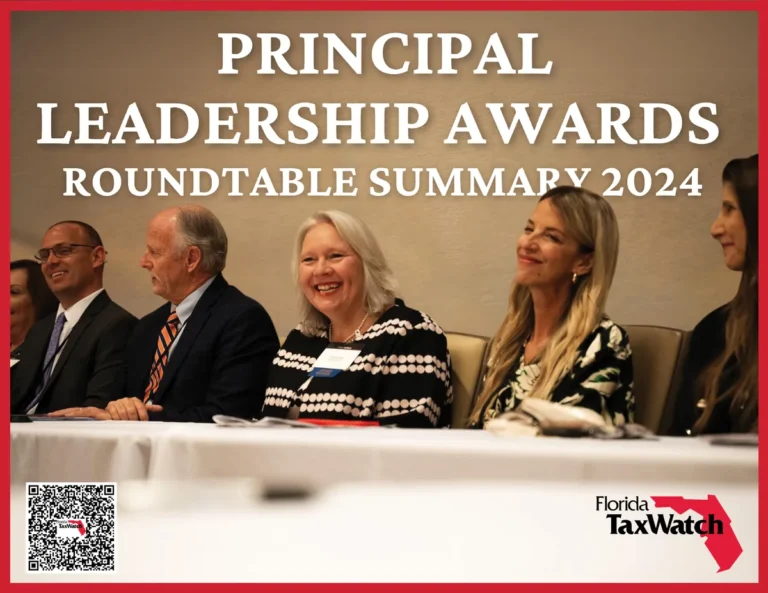
Principal Leadership Awards Roundtable Summary 2024

Education, Research

The Principal Leadership Awards Roundtable Summary highlights the contributions of 15 outstanding principals who have significantly influenced student achievement under challenging conditions. This document explores effective strategies in teacher retention, school culture, and community engagement, drawn from a roundtable discussion of award-winning principals. It offers practical insights and research-backed recommendations to enhance educational outcomes. Educators and leaders are encouraged to access and utilize this report to foster educational excellence across Florida.

2024 Budget Turkey Watch Report

Budget Turkeys, Research

Florida TaxWatch is proud to present the 2024 Budget Turkey Watch Report, an annual independent review that has been a staple since 1983. This report scrutinizes the Florida FY2024-25 budget, identifying appropriations that bypass established legislative procedures. Known as Budget Turkeys, these appropriations often serve limited areas, are not core state functions, or circumvent competitive bidding and oversight.

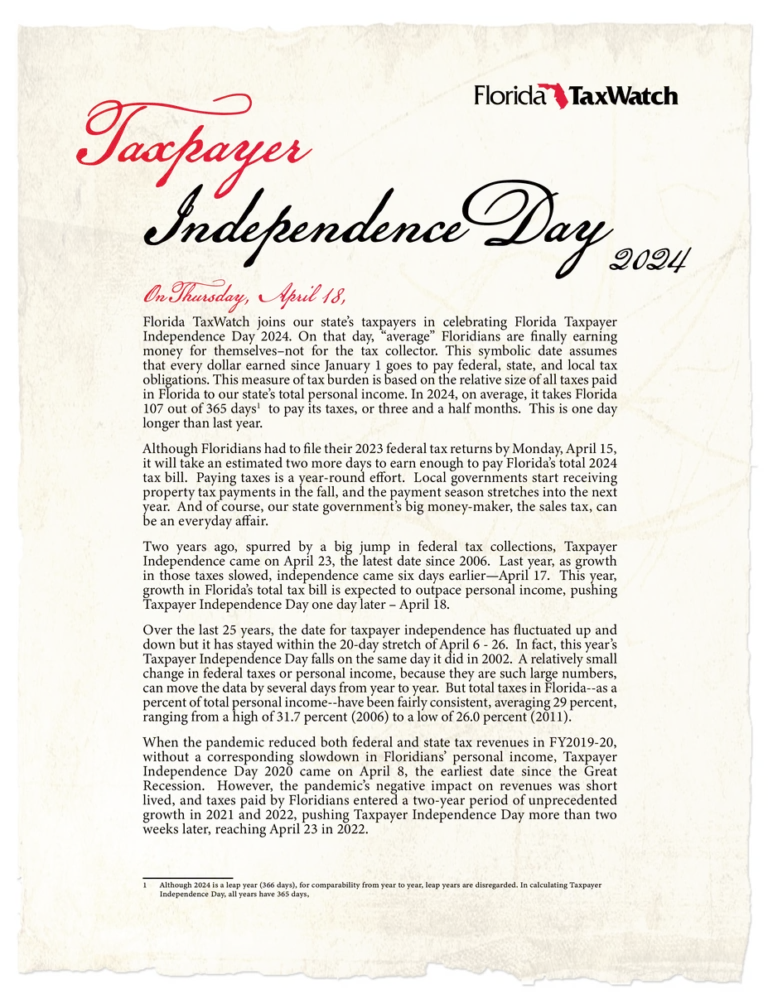
Florida Taxpayer Independence Day 2024

Research, Taxes, Taxpayer Guide

In 2024, Floridians will spend an average of 107 days working to pay off their tax obligations. The state’s total tax burden is estimated at $455 billion, with federal, state, and local taxes accounting for 71%, 15%, and 14%, respectively. Over the past decade, total taxes paid by Floridians have increased by 90%. Despite the challenges, Florida’s state tax burden remains one of the lowest in the nation. Download the full report to learn more about the tax landscape in Florida.

“If You Build It, He Will Come”: Florida TaxWatch Looks At The Tampa Bay Rays’ Ballpark Proposal

Local Government, Research

This report analyzes the key aspects of the deal and identifies critical questions that local officials should consider before deciding whether the proposed ballpark is in the best interest of taxpayers. The report does not draw conclusions on the merits of the deal but instead focuses on outlining the important factors that need to be weighed, such as the total public costs, the best use of public funds, and the fairness of the cost-sharing agreement. While the project is expected to generate significant economic impacts over 30 years, research shows that the benefits of publicly subsidized sports facilities are often overstated. To learn more about this critical issue affecting the Tampa Bay region, download the full report for an in-depth, independent analysis.

2020 Census – How Florida Counties Compare

Census, Census Institute, Research

“2020 Census Participation: How Florida Counties Compare,” provides valuable insights into census participation across the state in 2020 and emphasizes the importance of securing a complete count in the upcoming 2030 Census. The report examines key metrics, highlights the costly impacts of undercounts, and outlines actionable steps businesses and individuals can take now to support a complete count. With Census Day 2030 approaching, the time to prepare is now. Download the full report to learn more and discover how you can help ensure Florida receives its fair share of federal funding and representation.

2024 Florida Legislative Session Wrap-Up

Budget/Approps, Corrections/Judicial, Economic Development, Education, Energy & Environment, Health Care, Research, Retirement, Taxpayer Guide, Tourism, Transportation

The 2024 Florida Legislative Session Wrap-Up offers a concise yet thorough review of the session’s key outcomes. With a $117.5 billion budget, over $1 billion in tax relief, and nearly $10 billion in reserves, the Legislature addressed crucial issues in healthcare, education, insurance, and the environment. The report provides an insightful overview of the bills and budget items that passed, as well as notable legislation that failed to advance, making it an essential resource for understanding the current state of Florida policy and its implications for residents and taxpayers.

Monitoring and Oversight of General Obligation Bonds to Improve Broward County Schools

Broward BOC, Research

This report for the Broward Bond Oversight Committee offers an insightful overview of the SMART Program’s achievements and challenges as it progresses into its tenth year. Broward County Public Schools (BCPS) remains committed to enhancing educational facilities, technology, safety, arts, and athletics through the strategic use of General Obligation Bond funds. Despite facing unforeseen challenges, the program is on track, with significant milestones reached in school safety enhancements and technology upgrades, ensuring an enriched learning environment for students. Financial oversight and community engagement are emphasized as key elements in maintaining transparency and accountability. As BCPS navigates through these complexities, the report underscores a collective effort towards fulfilling the promises made to the community, aiming for the complete execution of the SMART Program by October 31, 2025.

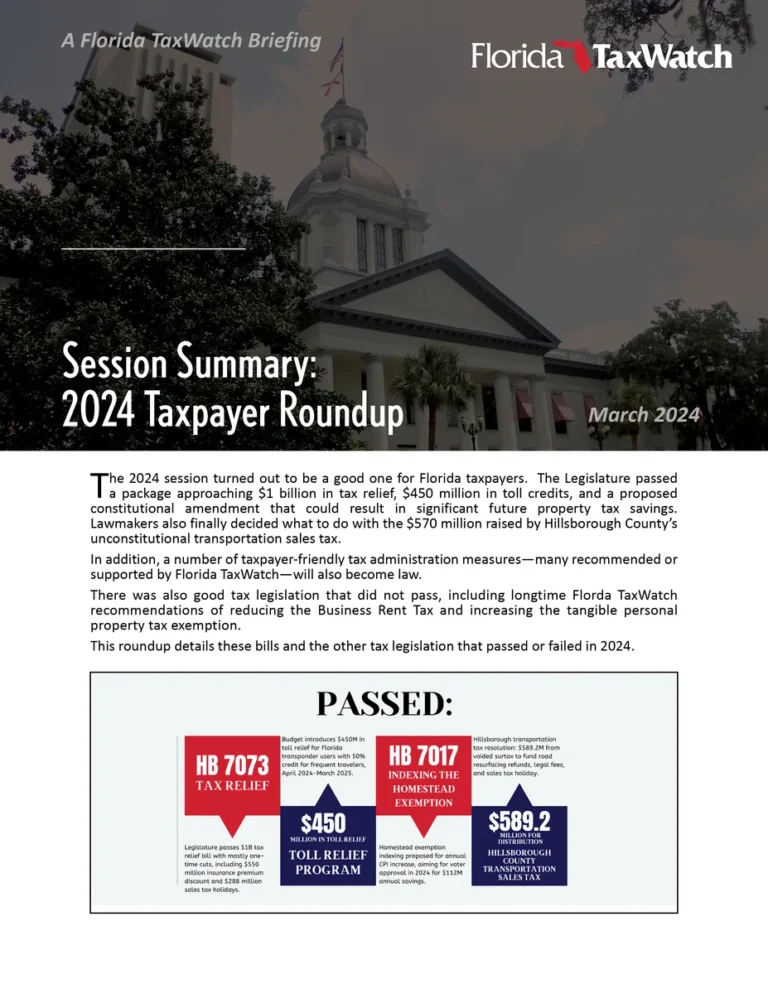
Session Summary: 2024 Taxpayer Roundup

Budget/Approps, Research, Taxes, Taxpayer Guide

The Florida TaxWatch’s 2024 Legislative Session Taxpayer Roundup report provides a comprehensive overview of significant tax legislation in Florida, highlighting nearly $1 billion in tax relief measures, including toll credits and potential property tax savings through a proposed constitutional amendment. Key successes include substantial tax cuts, sales tax holidays, and new tax credits aimed at supporting employment and child care.

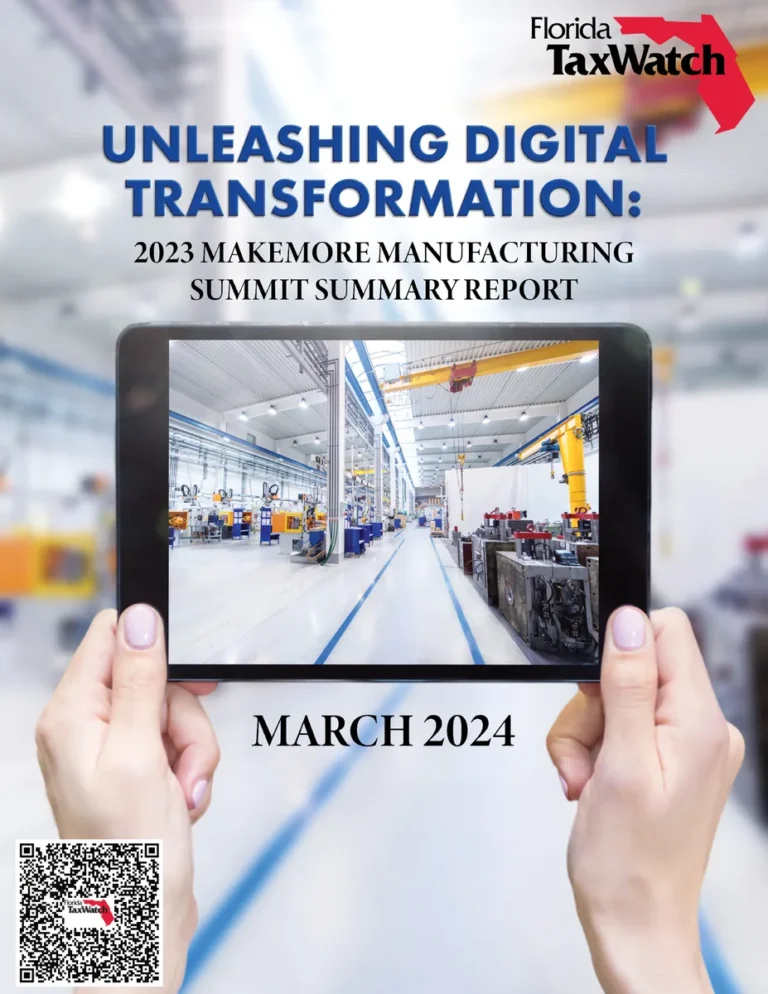
Unleashing Digital Transformation: 2023 MakeMore Manufacturing Summit Summary Report

Manufacturing, Research

The 2023 MakeMore Manufacturing Summit Report delves into the significance of digital transformation in Florida’s manufacturing sector. It provides a comprehensive overview of current challenges, opportunities, and advancements within the industry, with a particular focus on the adoption of new technologies for enhanced value and profitability. Tailored for policymakers, industry stakeholders, and interested parties, the report highlights the summit’s collaborative efforts to drive economic growth and job creation in Florida. It serves as a crucial resource for understanding the future direction of manufacturing in the state and underscores the importance of innovation and technology in maintaining competitive edge and fostering a robust manufacturing ecosystem.

Florida’s Labor Market Continues Cooling Down at a Slow Rate

BOC, Research, Workforce Development

This Florida TaxWatch blog examines labor market changes amid the Covid-19 pandemic, with a focus on the U.S. and Florida. It notes a national slowdown in job openings, with a stable 3.7% unemployment rate, contrasting with Florida’s lower 2.9% rate and job gains in most sectors. The data suggests a cooling labor market, but not enough to significantly impact inflation. Despite Federal Reserve efforts to slow the economy, there are still more jobs than unemployed persons nationally. Experts no longer anticipate a recession, but inflation concerns persist, especially if the Federal Reserve changes interest rates.

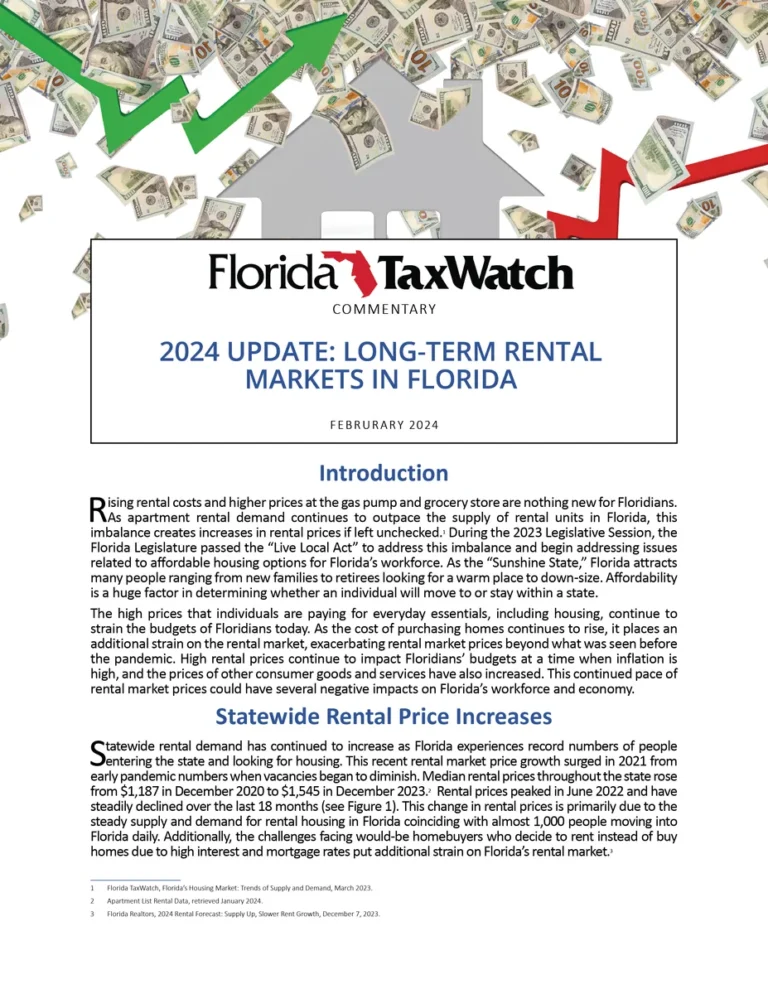
2024 Update: Long-Term Rental Markets In Florida

Housing Affordability, Research, Tourism

This Florida TaxWatch commentary highlights the imbalance between the demand and supply of rental units in the state, leading to rising rental costs. The document notes significant increases in rental prices since the pandemic, with specific emphasis on metropolitan areas like Miami, Tampa, and Jacksonville. It also addresses the impact of these rising costs on Florida’s workforce and economy, including the implications for cost-burdened households. The paper further examines state-to-state migration trends, particularly focusing on Florida residents moving to Georgia for more affordable housing options. The overall narrative suggests a complex interplay between economic factors, housing market dynamics, and demographic shifts in Florida’s rental market.

Florida TaxWatch Census Primer: Agriculture

Census, Census Institute

“Florida TaxWatch Census Primer: Agriculture” discusses the impact of census undercounts on Florida’s agriculture sector. It highlights the consequences of the 2020 census, where Florida missed counting 750,000 residents, leading to significant losses in federal funding and representation. The primer emphasizes the importance of accurate census counts for securing federal funding and making informed decisions in agriculture and rural development. It concludes by urging stakeholders to actively prepare for the 2030 Census to maximize accuracy and benefits for Florida’s agricultural community.

The 2030 Census Needs Your Attention

Census

Why you should care about the impact of the undercount in the 2020 Census in Florida and outlines strategies to improve census participation for 2030. This primer highlights that Florida missed approximately 750,000 residents in the 2020 count, which could lead to a significant loss in federal funding and possibly an additional congressional seat. The document emphasizes the importance of census data in resource allocation, emergency planning, and business decisions. It suggests actions for legislators, constituents, and businesses, such as funding Complete Count Committees, promoting awareness, and integrating census information into community and business activities.

The Impact of Unlicensed Vacation Rentals on Florida’s Economy

Housing Affordability, Research, Tourism

“Unlicensed Vacation Rentals: An Analysis of Florida’s Tourism-Driven Economy” provides an in-depth analysis of the unlicensed vacation rental market in Florida. It highlights the significant impact these rentals have on the state’s tourism economy, including issues of tax evasion, safety concerns, and unfair competitive advantages over licensed properties. The research reveals a notable prevalence of unlicensed rentals in Florida, which, in 2022, constituted a significant proportion of the state’s temporary public lodging units. The study brings to light how operators of these unlicensed rentals often circumvent tax obligations, thus negatively impacting the state’s revenue and creating an unlevel playing field in the tourism sector. This paper includes recommendations for stricter enforcement of licensing regulations, improved transparency in rental operations, and more efficient tax collection mechanisms to address these challenges. The paper serves as a critical resource for policymakers, business owners in the tourism sector, and tax authorities, providing essential insights to inform decisions and strategies aimed at ensuring a fair and regulated tourism industry in Florida.

Florida TaxWatch, Associated Industries of Florida Outline Recommendations to Ensure Success of Florida’s Large-Scale Information Technology Projects

Press Releases

Florida TaxWatch, in collaboration with the Associated Industries of Florida (AIF), released a report titled “It’s Time to Reform Florida’s Information Technology Procurement and Oversight.” The report highlights Florida’s 25-year history of inadequately executed large-scale IT projects and offers recommendations for reforming the Florida Digital Service’s (FL[DS]) procurement and oversight processes to ensure their success. Key points from the report include: – FTW and AIF identified recurring problems in statewide technology projects, including poor planning, contracting, and oversight, leading to failures in accountability. – Since 1999, Florida has repeatedly restructured its state agency overseeing these IT projects, with the FL[DS] established most recently in 2020. – Public sector IT agencies like the FL[DS] struggle to compete with the private sector in hiring knowledgeable staff due to salary and work condition limitations, leading to an overreliance on consultants and vendors. – The report proposes 10 recommendations for the Florida Legislature, such as forming a joint committee on IT and offering incentives like signing bonuses to attract IT staff. Florida TaxWatch President and CEO Dominic M. Calabro emphasized the need for the state’s IT projects to be delivered efficiently and within budget. AIF President and CEO Brewster B. Bevis highlighted the importance of Florida improving its IT processes for long-term success. For more details and access to the full report, including all recommendations, interested parties are directed to the Florida TaxWatch website. FTW, a nonpartisan, nonprofit government watchdog, has been working to enhance productivity and accountability in Florida government for over forty years.

Become a Member

Support Responsible
Taxation & Government Spending

For over 45 years, donor support has made Florida TaxWatch the state’s leading independent voice for taxpayer accountability. There are many ways to support our mission.

Scroll to Top