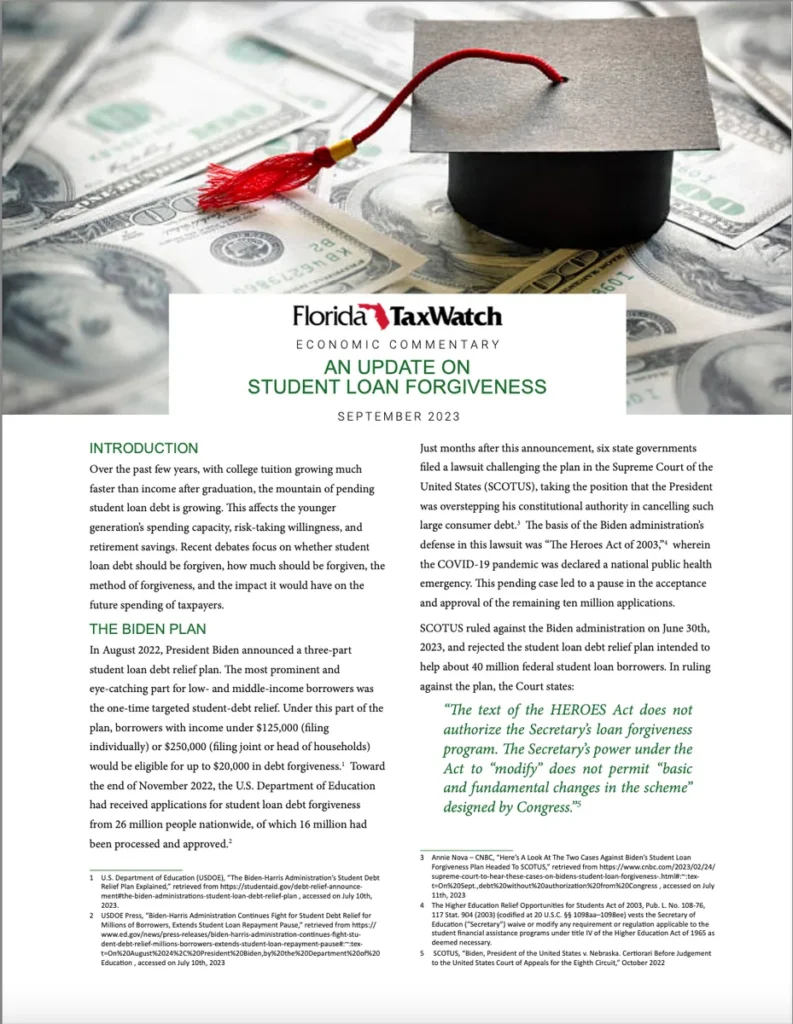
In August 2022, President Biden announced a three-part student loan debt relief plan. The most prominent and eye-catching part for low- and middle-income borrowers was the one-time targeted student-debt relief. Under this part of the plan, borrowers with income under $125,000 (filing individually) or $250,000 (filing joint or head of households) would be eligible for up to $20,000 in debt forgiveness. Toward the end of November 2022, the U.S. Department of Education had received applications for student loan debt forgiveness from 26 million people nationwide, of which 16 million had been processed and approved.
Just months after this announcement, six state governments filed a lawsuit challenging the plan in the Supreme Court of the United States (SCOTUS), taking the position that the President was overstepping his constitutional authority in cancelling such large consumer debt. The basis of the Biden administration’s defense in this lawsuit was “The Heroes Act of 2003,” wherein the COVID-19 pandemic was declared a national public health emergency. This pending case led to a pause in the acceptance and approval of the remaining ten million applications.