Research Library

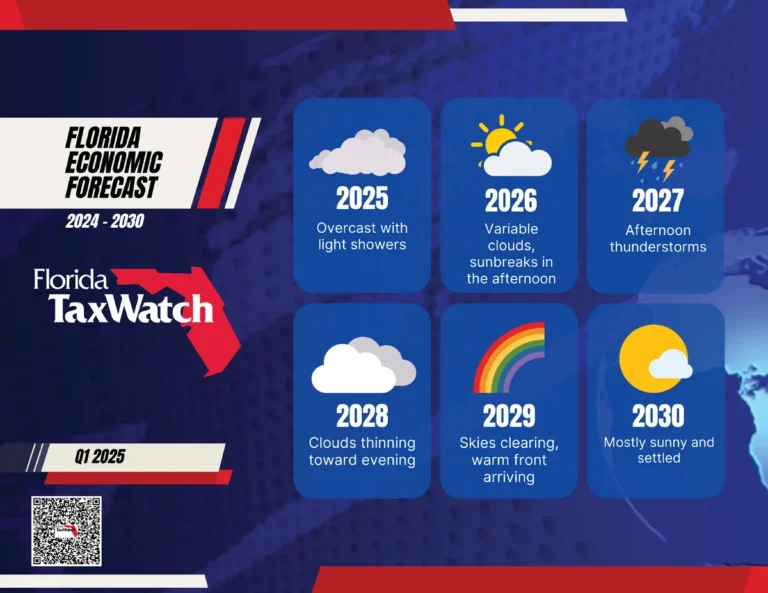
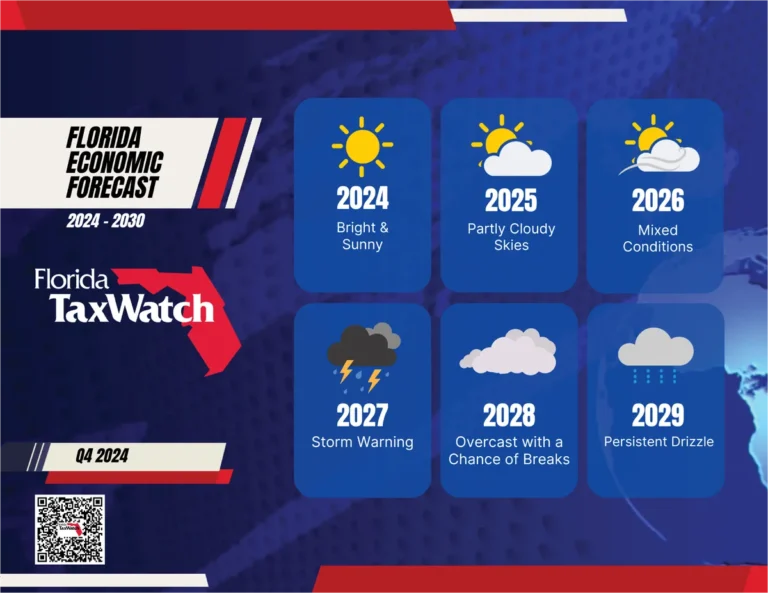
Florida Economic Forecast: Q1 2025

Economic Development, Economic Forecast, Research, Workforce Development

Florida’s economy has been growing to new heights these past years — reaching nearly $1.5 trillion. The Q1 2025 economic forecast by Florida TaxWatch examines key trends in population growth, employment, income, GDP, and tourism, offering valuable insights for policymakers, business leaders, and taxpayers.

Florida TaxWatch 2025 Legislative Session Wrap-Up

Education, Health Care, Housing Affordability, Local Government, Research

Florida TaxWatch’s 2025 Legislative Session Wrap-Up report provides a concise but comprehensive overview of the extraordinary budget impasse that extended this year’s session to June 6, 2025, the narrow scope of allowed legislation (including the General Appropriations Act, budget conforming bills, the House and Senate tax packages, and the Rural Renaissance bill), and the high-stakes negotiations that will resume on May 12 in conference committee.

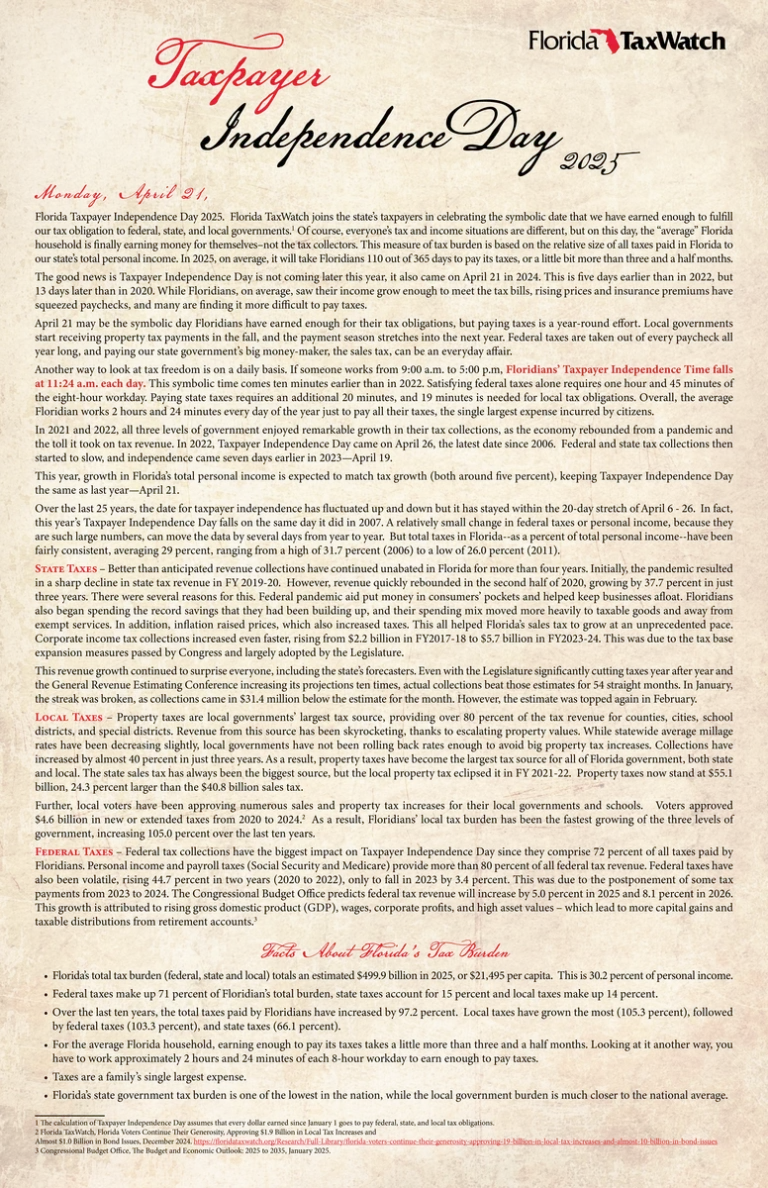
Taxpayer Independence Day 2025

Local Government, Research

Florida TaxWatch’s Florida Taxpayer Independence Day 2025 report commemorates the symbolic April 21 date when the average Floridian has earned enough to satisfy all federal, state, and local tax obligations. In 2025, Floridians spend 110 days—until 11:24 a.m.—paying taxes each year before they begin earning for themselves.

Extending the Local Communication Services Tax Increase Moratorium and a Sales Tax Exemption for Broadband Equipment Should be Part of Any Tax Relief Package this Session

Budget/Approps, Research

Florida TaxWatch’s CST and Broadband Equipment report examines the impact of the high Communications Services Tax (CST) on broadband infrastructure investment and consumer expenses. The report details how Florida’s current CST ranks among the highest in the nation and explores its effects on both businesses and low-income households, who are particularly vulnerable to the disproportionate burden of such taxes on essential wireless services.

Fair Share Taxes Driven Away by Electric Vehicles

Research, Transportation

Proposed solutions include redistributing a portion of the sales tax collected at EV charging stations to the STTF and adopting a hybrid approach that combines higher registration fees with targeted EV taxes. These proposals aim to ensure that all drivers contribute their “fair share” toward maintaining Florida’s transportation infrastructure in the face of rapid technological change.

The Voter Guide for the City of North Port’s May 13, 2025 Referendum

Budget/Approps, Energy & Environment, Local Government, Research, Voter Guides

The City of North Port, Florida’s second fastest growing city in the United States, faces significant challenges from rapid urbanization, population growth, and ongoing recovery from Hurricane Ian’s devastating impact in 2022. This Florida TaxWatch report examines the implications of the May 13, 2025 special election referendum, which asks voters to decide on several critical municipal issues.

Using Microelectronic Sensors to Continuously Monitor Vertical Infrastructure

Research

This Florida TaxWatch report explores how microelectronic smart sensor networks can proactively monitor vertical infrastructure to detect issues such as structural fatigue, corrosion, or damage before they lead to catastrophic failures, as seen in the 2021 Champlain Towers South collapse (98 deaths) and the 2018 Florida International University pedestrian bridge collapse (6 deaths).

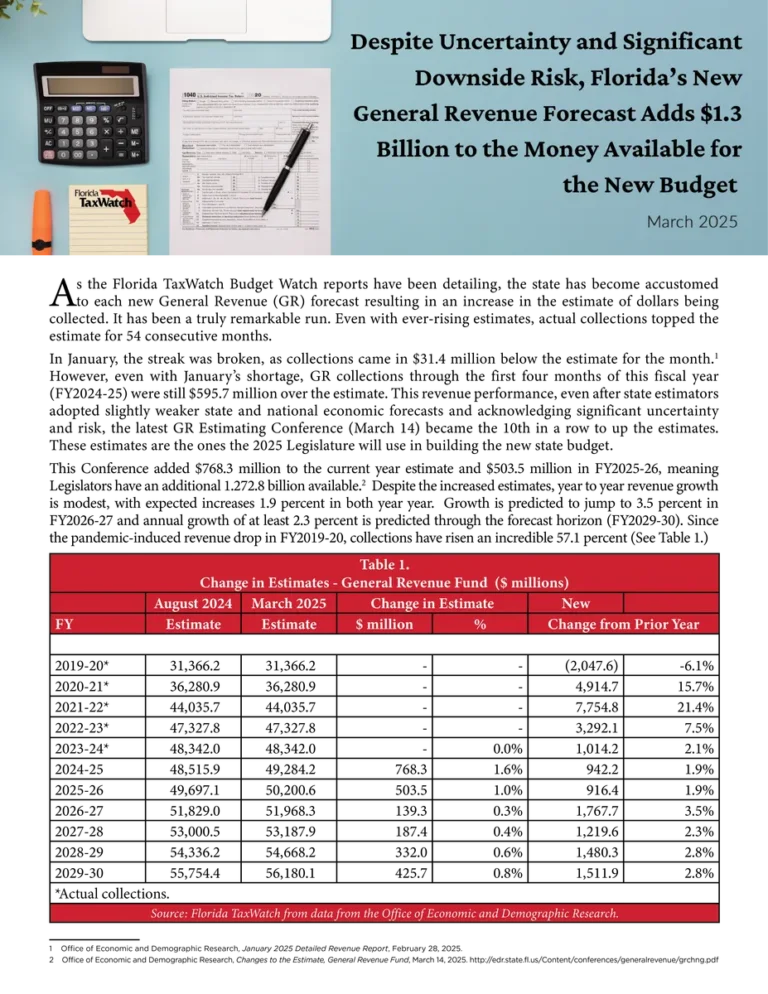
Despite Uncertainty and Significant Downside Risk, Florida’s New General Revenue Forecast Adds $1.3 Billion to the Money Available for the New Budget

Budget/Approps, Research

Florida TaxWatch’s Budget Watch report for March 2025 examines the state’s updated General Revenue forecast, which adds approximately $1.3 billion to the money available for the new state budget. After a long streak of collections exceeding estimates, January’s shortfall signals a shift amid mounting economic uncertainty.

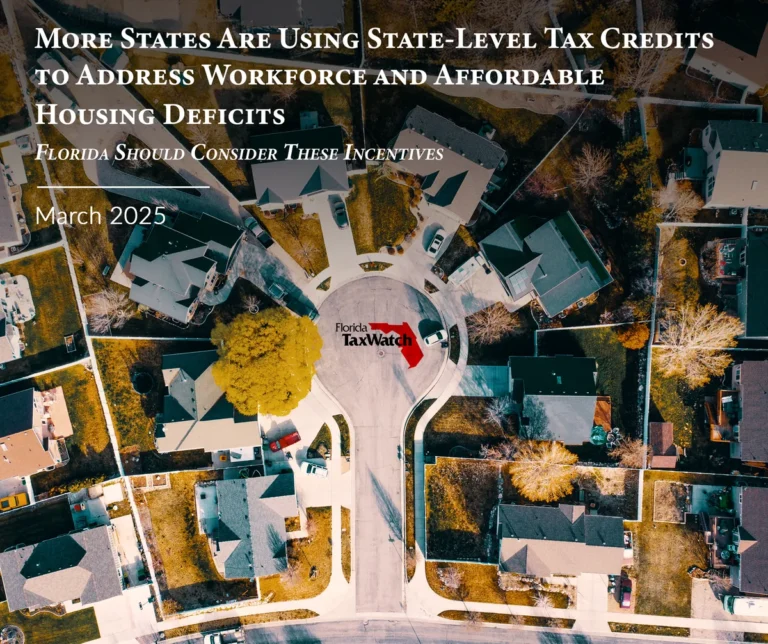
More States Are Using State-Level Tax Credits to Address Workforce and Affordable Housing Deficits

Housing Affordability, Research

This Florida TaxWatch report highlights a severe affordable housing crisis in Florida, where rising housing costs and a limited supply of affordable units place significant financial and social burdens on low-income families and essential workers. It advocates for the adoption of state-level tax credits to supplement federal programs, thereby incentivizing the construction of affordable housing, stimulating local economies, and reducing public costs.

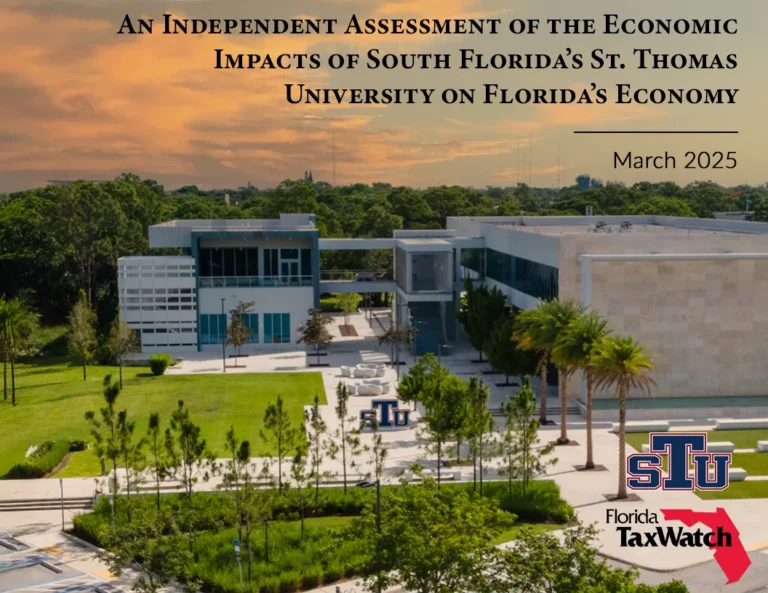
An Independent Assessment of the Economic Impacts of South Florida’s St. Thomas University on Florida’s Economy

Economic Development, Education, Research, ROI Study

St. Thomas University (STU) plays a large role in Florida’s economy, fostering workforce development and economic mobility, particularly for underrepresented communities. This Florida TaxWatch ROI report evaluates STU’s impact, highlighting its contributions to job creation, income growth, and return on investment. With record-breaking enrollment, a diverse student body, and strong financial stability, STU generates over $1.5 billion in economic output and supports more than 8,500 jobs. Every $1 spent on STU results in $21.50 of economic output.

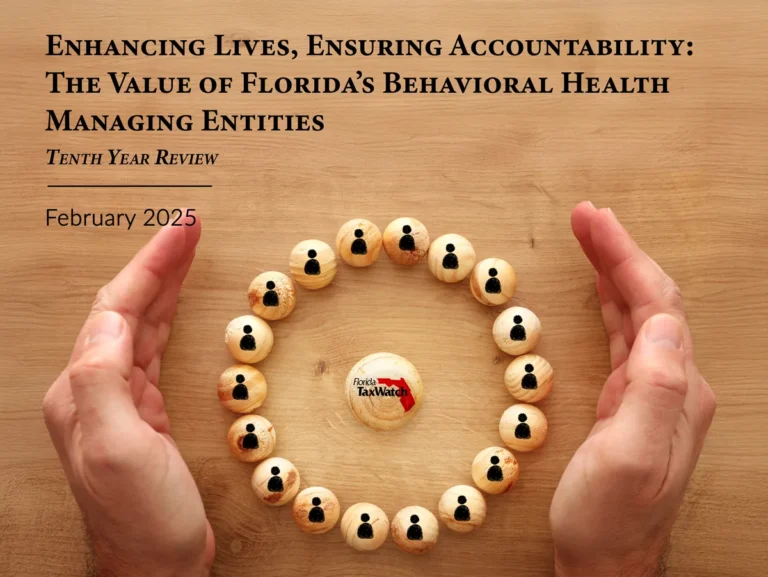
Enhancing Lives, Ensuring Accountability: The Value of Florida’s Behavioral Health Managing Entities

Cost Savings, Health Care, Research

Florida’s Behavioral Health Managing Entities (BHMEs) are at the heart of an innovative, community-based network delivering critical mental health and substance use services across the state. This report’s summary reveals how BHMEs efficiently coordinate a vast network of providers with minimal overhead—ensuring accessible, continuous care for vulnerable populations—while highlighting the risk that stagnant operational funding poses to their long-term sustainability. It ultimately recommends boosting operational funding from 3% to 5% to maintain the system’s effectiveness and guide future policy decisions.

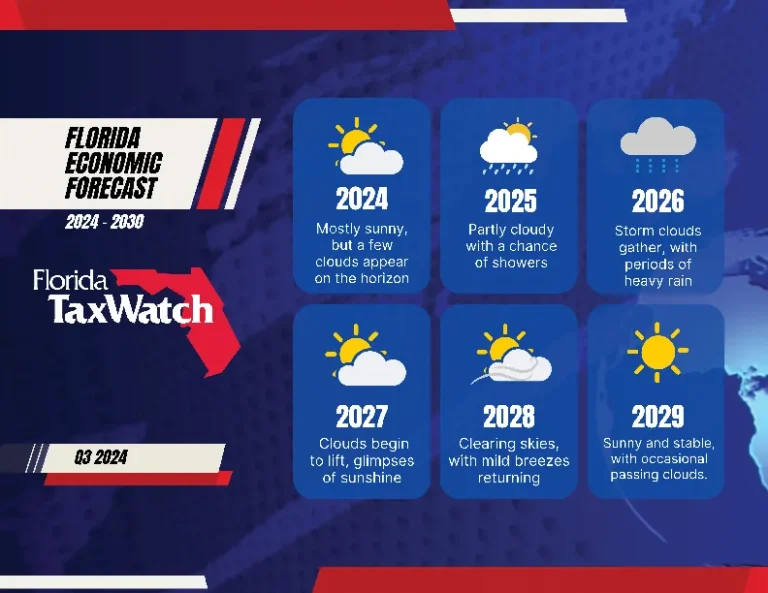
Florida Economic Forecast: Q3 2024

Economic Development, Economic Forecast, Research

Florida’s Economic Forecast 2024–2030 offers a concise look at Florida’s future economic landscape. The report, built on REC Group data, outlines how the state is expected to continue growing—approaching a nearly $1.5 trillion economy—while highlighting shifts in population, net migration, and employment. It also examines changes in GDP, personal income, and the influence of tourism, comparing these trends to broader national economic indicators. Overall, the forecast serves as a valuable guide for understanding the opportunities and challenges Florida may face as it transitions into a more normalized, post-pandemic economic environment.

The Consequences of a Census Undercount on Florida’s Healthcare Funding

Census, Census Institute, Health Care, Research

Florida’s 2020 Census undercount has put billions of federal healthcare dollars at risk. With 750,000 residents uncounted, the state is projected to lose up to $21 billion in funding for Medicaid, CHIP, and other essential programs. This miscount impacts hospital planning, healthcare access, and federal funding formulas, costing Florida taxpayers $2.3 billion annually in lost Medicaid funds alone.

Solvency of the State Employees’ Health Insurance Trust Fund

Cost Savings, Economic Development, Health Care, Research

Florida TaxWatch’s latest report examines the financial solvency of the State Employees’ Health Insurance Trust Fund, which faces rising costs and potential deficits in the coming years. Despite a projected $652.7 million cash balance for FY 2024-25, increasing healthcare expenses could lead to a $1.5 billion deficit by FY 2028-29. The report recommends increasing employee contributions to align with those of other large employers, potentially saving the state $446 million annually. Proactive policy changes are urged to ensure the fund’s sustainability amid future budget challenges.

Social Determinants of Health: Economic Stability

Economic Development, Institute of Quality Health and Aging, Research, Social Determinants of Health

This report, the fifth installment in Florida TaxWatch’s five-part Social Determinants of Health series, examines how economic stability—steady employment, adequate income, food security, and housing stability—affects health outcomes. It highlights the health disparities faced by low-income families and advocates for policies promoting job access, affordable housing, and proper nutrition to improve public health across Florida.

Teaching Every Child to Swim Saves Thousands of Lives from Needless Drownings and Taxpayers Millions

Cost Savings, Education, Energy & Environment, Every Child a Swimmer, Research

This Florida TaxWatch report highlights drowning as a leading cause of death for children in the U.S., particularly in Florida. It stresses the importance of teaching children water safety, noting that swimming lessons can reduce drowning risk by 88%. Despite recent legislative efforts, more actions are needed, such as offering drowning prevention videos to new parents in hospitals and increasing safety measures for at-risk children, including those with autism. The report calls for continued policy efforts to prevent drowning-related tragedies and save lives.

More Than a Store: The Fiscal and Economic Impacts of Goodwill in Florida

Economic Development, Research

This report highlights the substantial fiscal and economic impacts of Goodwill in Florida, contributing nearly $1.2 billion to the state’s economy in 2023. Goodwill’s nine territories across Florida delivered impactful programs, including career readiness, community services, and re-entry support. These initiatives not only created over 14,000 jobs but also added $481.6 million in personal income and $652 million to Florida’s GDP. Goodwill’s model of investing donations directly into its programs demonstrates its dedication to fostering workforce development and enhancing local economies.

Become a Member

Support Responsible
Taxation & Government Spending

For over 45 years, donor support has made Florida TaxWatch the state’s leading independent voice for taxpayer accountability. There are many ways to support our mission.

Scroll to Top